
Lead by Serving: What Godly Strength Looks Like

What does it mean to become a godly man? How should you use your strength, handle responsibility, and treat the people entrusted to your care?
Those questions matter long before you become a husband, father, or leader. The person you are becoming is being shaped right now—in your conversations, your reactions, your friendships, and the responsibilities you accept.
In Ephesians 5 and 1 Timothy 3, Scripture presents a challenging calling: become a lead servant who carries responsibility with humility, love, and sacrifice.

Your Value Begins with God
Before considering what God calls men and women to do, remember what He says about who they are: both are made in His image. Both possess equal dignity and worth.
Your value does not come from having authority, winning an argument, or proving that you are more capable than someone else. It comes from the God who created you. The same is true of the person standing in front of you.
That truth should shape how you read Scripture. When you encounter a passage about responsibility, ask yourself: What does this require of me? How is God calling me to serve? Where do I need to grow?
You can spend so much time thinking about what someone else should do that you overlook the obedience God is asking of you.

Let the Cross Shape Your Leadership
Ephesians 5:25 calls husbands to love their wives as Christ loved the church and gave Himself for her.
Pause and consider the weight of that command. Jesus willingly gave Himself for the people He loves. His example calls a husband to place his wife’s well-being ahead of his convenience and to carry responsibility with tenderness and care.
That means listening to her thoughts, taking her concerns seriously, and welcoming her wisdom. Harshness, manipulation, and control contradict the love a husband is called to reflect.
If you hope to marry someday, begin developing that character now. Practice listening when you would rather speak. Learn to receive correction without becoming defensive. Take responsibility for your decisions.
The cross gives you a searching question to ask whenever you have influence: Am I willing to bear a cost for the good of the person I am called to love?

Practice the Love You Say You Have
It is possible to say you would die for someone and still complain when they ask you to wash the dishes.
That gap between a dramatic promise and an ordinary response reveals something about the heart. We like to imagine ourselves making heroic sacrifices. Daily service often feels less appealing because it interrupts what we actually want to do.
Yet daily life is where love becomes visible.
It shows up when you put your phone down and give someone your attention. When you help with a task you did not create. When you seek understanding before assuming the worst. When you apologize without attaching a list of reasons the other person was also wrong.
Small sacrifices give substance to big promises.
As a student, you already have opportunities to practice this. Your response to your parents, your patience with a sibling, and your willingness to include someone who is overlooked all matter. These choices help form the character you will bring into future relationships and responsibilities.

Become Someone Others Can Trust
In 1 Timothy 3, the qualifications for church overseers place considerable weight on character. Those entrusted with this responsibility must demonstrate self-control, gentleness, hospitality, faithfulness, sound judgment, and the ability to teach.
The passage also connects care for the church with leadership at home. How a man treats the people closest to him matters deeply to his readiness to care for others.
You may never become a pastor or elder, but these qualities still give you much to consider.
Can people trust your word? How do you respond when you are corrected? What happens when you do not get your way? Are you willing to serve when nobody is watching?
A title cannot do the work of developing character. That growth happens as you practice faithfulness in the responsibilities already in front of you.

Yield Your Everyday Decisions to the Spirit
Before Ephesians 5 addresses marriage, it calls believers to be filled with the Holy Spirit.
Being filled with the Spirit involves yielding yourself to His direction. You need His work in the very places where selfishness, pride, and impatience tend to take over.
It is easy to agree with sacrificial love while reading about it. The challenge comes when you are tired, inconvenienced, or convinced that someone else should make the first move.
In that moment, pause and pray: Lord, help me respond in a way that reflects You. Show me what faithfulness looks like right now.
Your circumstances may remain difficult. You can still ask God to shape your response and help you take the next obedient step.
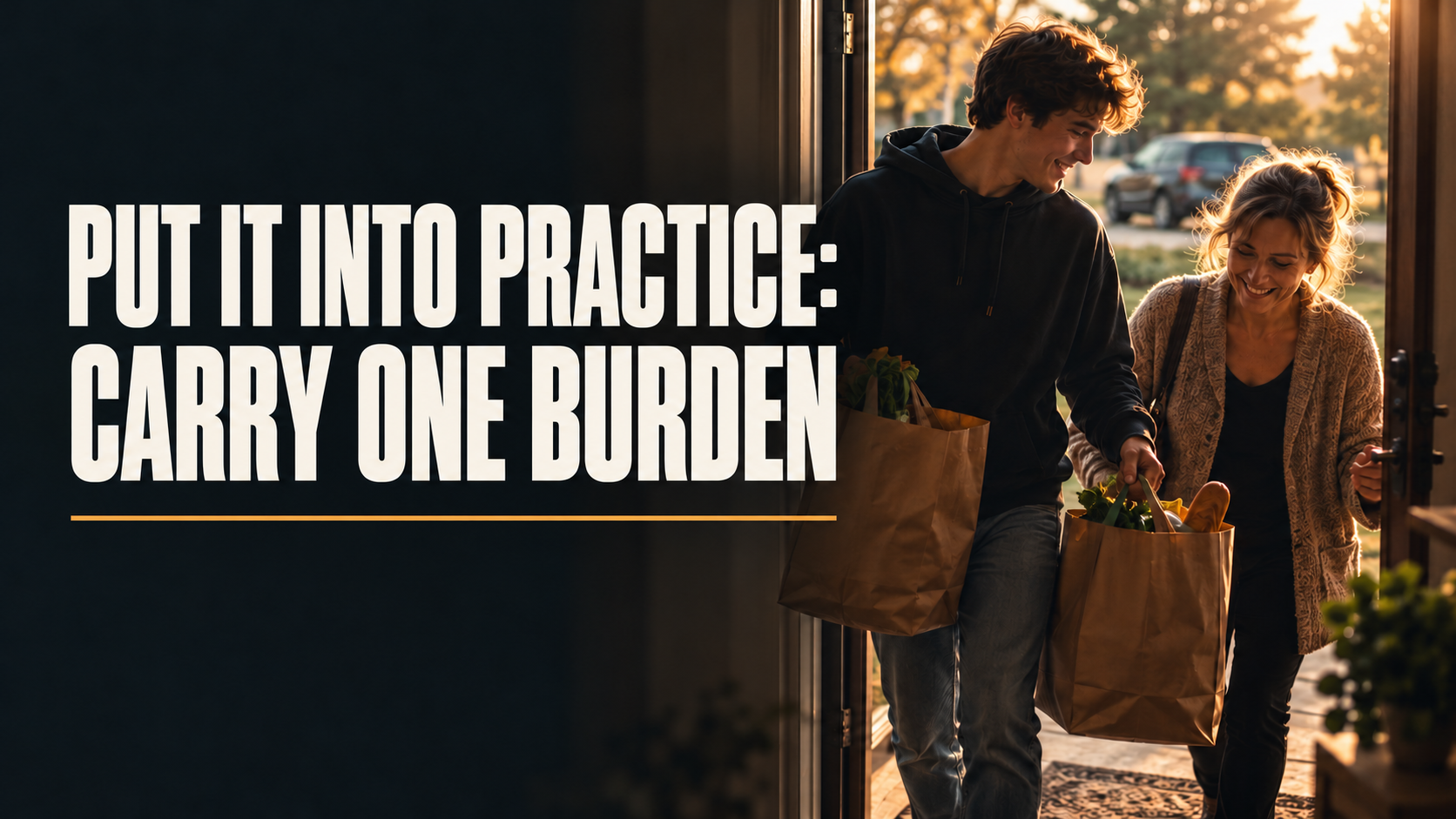
Put It into Practice: Carry One Burden
Before today ends, find one burden someone in your home is carrying and take a practical step to lighten it.
Wash the dishes without being asked. Help your sibling with something difficult. Put away your phone and listen to a parent who has had a hard day. If you are married, ask your spouse, “What is weighing on you today, and how can I help?” Then follow through.
Choose something that costs you a little time or comfort. Do it without announcing your sacrifice or expecting praise.
Before bed, ask yourself: Did my actions make someone else’s burden lighter today?
That is a concrete place to begin learning the kind of leadership Jesus calls you to practice—taking responsibility, giving yourself, and making His love visible to the people closest to you.
From a Thrive Students message by Pastor Josh at Moses Lake Bible Church.
