
Jesus Doesn’t Want Part of You: He Wants All of You | Luke 14:25-35

There is a version of Christianity that fits comfortably into the margins of our lives.
Jesus gets Sunday morning. He gets a prayer before dinner. He gets a place somewhere alongside family, work, hobbies, plans, ambitions, and everything else we care about.
But that is not the kind of discipleship Jesus describes.
In Luke 14, Jesus is surrounded by great crowds. People are following Him. They have seen miracles. They have heard Him teach with authority. They have watched Him heal the sick and feed thousands. Following Jesus was exciting.
Then Jesus turned to the crowd and said something that must have stopped people in their tracks.
“Whoever does not bear his own cross and come after me cannot be my disciple.”
—Luke 14:27
Jesus wasn't trying to build the biggest crowd possible.
He was asking the crowd whether they were truly willing to follow Him.
And He is still asking us the same question.
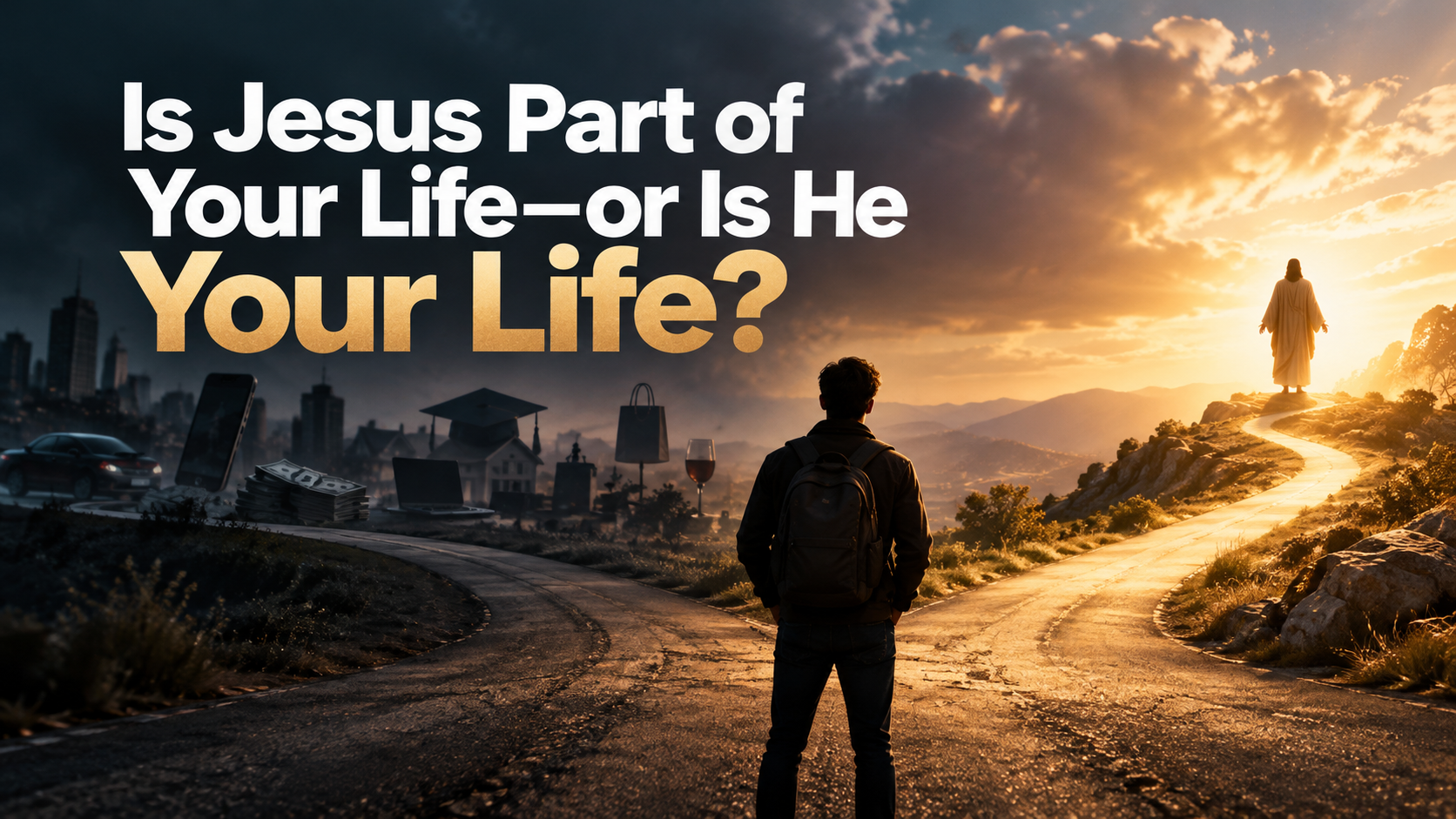
Is Jesus Part of Your Life—or Is He Your Life?
That may be the central question of this passage.
For many of us, Jesus can easily become one part of an otherwise very full life.
We have our marriage. Our children. Our career. Our finances. Our retirement plans. Our entertainment. Our comfort. Our dreams.
And then there is Jesus.
But Jesus does not present Himself as another category to add to the schedule.
He calls us to put Him above everything else.
Jesus says:
“If anyone comes to me and does not hate his own father and mother and wife and children and brothers and sisters, yes, and even his own life, he cannot be my disciple.”
—Luke 14:26
Those are difficult words.
Jesus is not contradicting the rest of Scripture and commanding us to despise our families. Scripture repeatedly commands us to honor our parents, love our spouses, care for our children, and love one another.
Jesus is making a comparison.
Our love, devotion, and allegiance to Him should be so great that everything else is unquestionably second.
Not a close second.
Jesus must occupy a category of His own.
And putting Jesus first does not cause us to love our families less. It actually teaches us how to love them better.
When Christ is first, He confronts our selfishness. He teaches us forgiveness. He produces humility. He exposes sin. He reshapes our priorities.
We cannot love the people around us as well as we should if Jesus does not have first place in our hearts.
Following Jesus Has a Cost
Jesus then tells His followers to count the cost.
He describes someone preparing to build a tower. Before construction begins, a wise builder sits down and determines whether he has what is necessary to finish.
Otherwise, the foundation gets built, the project stops halfway through, and everyone sees that the builder began something he was unwilling or unable to finish.
Jesus' point is clear:
Don't approach discipleship casually.
Following Jesus is not simply adding something inspirational to your life. It is surrendering your life to Him.
That runs directly against the message our culture constantly gives us.
Follow your heart.
Live your truth.
Do whatever makes you happy.
Protect your comfort.
Build your life around yourself.
Jesus gives us an entirely different invitation:
Deny yourself.
Take up your cross.
Follow Me.
Christianity isn't fundamentally about getting Jesus to support the life we have already decided to live.
It is placing our lives into His hands and saying, “Lord, You decide.”

Easy In Often Means Easy Out
There is a danger in presenting Christianity as though following Jesus costs nothing.
If someone begins following Christ primarily because it feels good, provides community, fixes a problem, gives them something they want, or improves their circumstances, what happens when following Jesus becomes difficult?
What happens when Scripture confronts something they don't want confronted?
What happens when obedience becomes unpopular?
What happens when following Jesus costs relationships, opportunities, comfort, approval, or reputation?
Jesus wanted the crowds to understand that discipleship was not going to be easy.
Some of the people following Him loved the miracles.
They loved the bread.
They loved the excitement.
But Jesus was headed toward Jerusalem.
He was headed toward the cross.
And eventually following Him would require something from them.
It still does.
There comes a moment when every follower of Jesus must wrestle with the question:
Do I want Jesus Himself, or do I primarily want what I hope Jesus will give me?
Those are not the same thing.
Jesus and His church are not simply a way to get what we want.
Jesus must become what we want.
Fellowship with Him. Knowing Him. Honoring Him. Living for His glory.
That is the heart of discipleship.
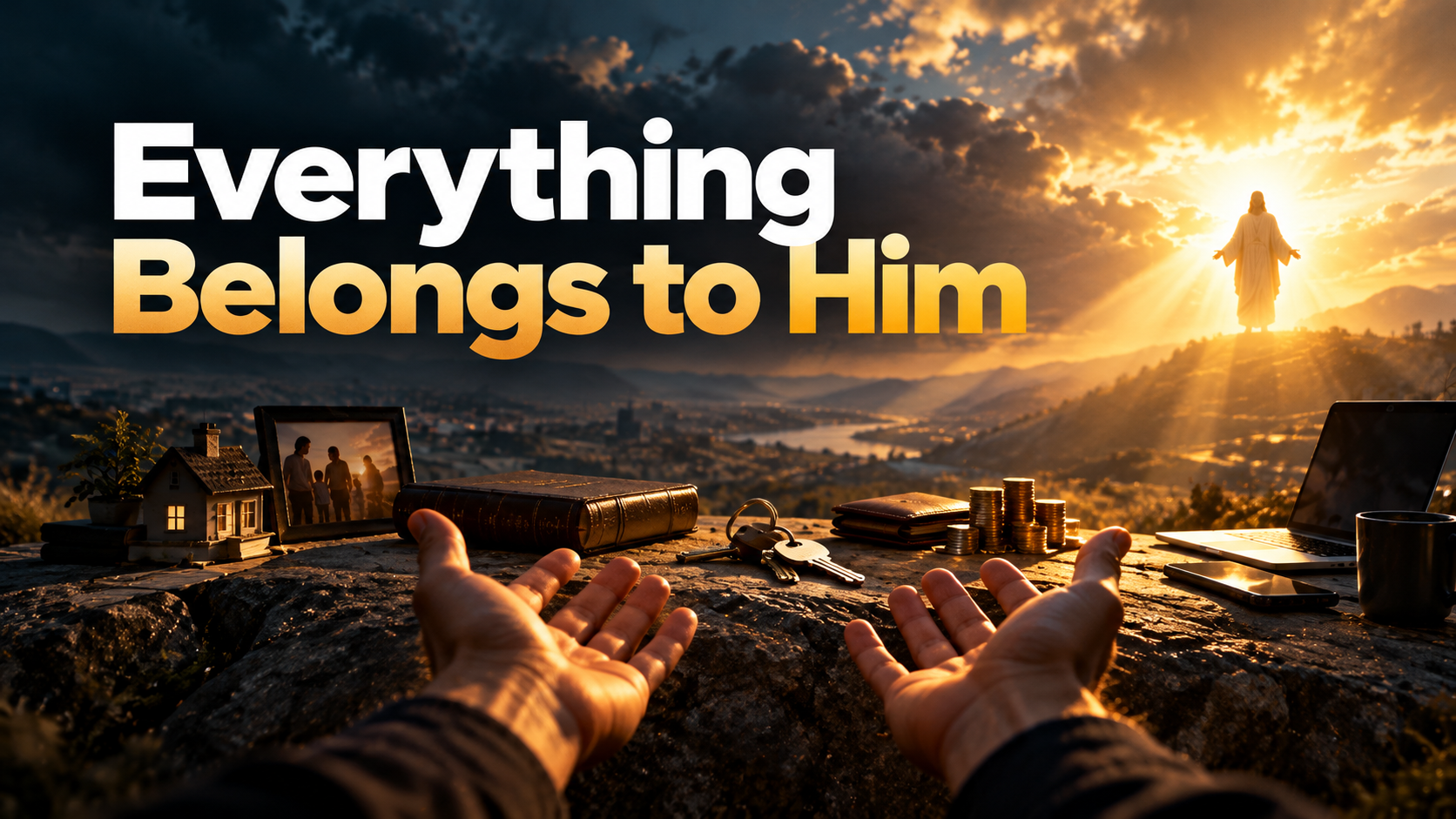
Everything Belongs to Him
Jesus makes the challenge even more direct:
“So therefore, any one of you who does not renounce all that he has cannot be my disciple.”
—Luke 14:33
That does not necessarily mean every Christian must give away every possession.
It means something deeper.
We surrender ownership.
Everything we have becomes subject to the will of God.
Our money belongs to Him.
Our house belongs to Him.
Our career belongs to Him.
Our future belongs to Him.
Our gifts belong to Him.
Our relationships belong to Him.
Even our children ultimately belong to Him.
We become stewards rather than owners.
The surrendered heart says:
“God, everything I have came from You. Everything I have belongs to You. Use it however You desire.”
That is a much harder prayer than simply asking God to bless the plans we have already made.
It says:
“God, I will go anywhere You want me to go. I will do anything You want me to do. More than anything else, I want to walk in fellowship with You and bring You honor, glory, and delight.”
That is what surrender looks like.

There Is No Negotiating Table
Jesus also tells the story of a king considering whether his army can stand against a much larger force.
A wise king understands the situation before him.
For us, the spiritual reality is even clearer.
We don't negotiate the terms of surrender with God.
We cannot say, “Jesus, You can have this part of my life, but not that one.”
“You can have Sunday, but not Monday.”
“You can have my worship, but not my money.”
“You can have my eternity, but not my relationships.”
“You can forgive my sin, but don't ask me to change.”
Jesus is Lord.
We are not.
That doesn't mean Christians follow Him perfectly. We don't.
There is repentance. There is growth. There is restoration. There is sanctification. God patiently works in His people and continually exposes areas we have not fully surrendered.
The question isn't whether you have reached perfection.
The question is whether your heart is surrendered.
When Jesus puts His finger on an area of your life, is your response ultimately:
“Yes, Lord”?

Count the Cost—but Count the Other Cost Too
Jesus tells us to count the cost of following Him.
And the cost can be real.
Obedience may make us uncomfortable.
Following Scripture may make us unpopular.
Standing for truth may bring criticism.
Growing more like Jesus will even make us increasingly aware of things we once ignored. We begin to feel the weight of our own sin more deeply, and we begin to grieve the brokenness around us more deeply.
But there is another cost we should count.
What is the cost of rejecting Him?
Whatever following Jesus may cost us during this brief life, rejecting Him costs infinitely more.
Eternity is at stake.
That makes the question of discipleship far bigger than convenience, comfort, reputation, or even the number of years we have on this earth.
Jesus is worth infinitely more than anything He may ask us to surrender.

Salt and Light in a Half-Hearted World
Jesus closes this teaching by talking about salt that has lost its taste.
Salt that no longer functions like salt isn't accomplishing what it was created to do.
Jesus used similar language in the Sermon on the Mount when He told His followers:
“You are the salt of the earth.”
And:
“You are the light of the world.”
Followers of Jesus are supposed to be different.
Our lives should point beyond ourselves.
Our obedience should reveal something about the goodness of our King.
Our priorities should demonstrate that Jesus is more valuable than comfort, possessions, popularity, or personal autonomy.
When Jesus is exalted in our lives, people begin to see that He is worthy.
That doesn't happen through our own strength.
It happens because the Spirit of God is working in surrendered people.

He Is Worth Everything
The calling is high.
The cost is real.
But so are the blessings of obedience.
God has not left us alone to figure out how to follow Him.
He has given us His Word.
He has given us His Spirit.
He has given us His church.
He has given us fellowship with His people.
And above all, He has given us Himself.
So perhaps the question from Luke 14 isn't merely, “Am I a Christian?”
Perhaps we should allow Jesus to ask something deeper.
Is Jesus truly first in my life?
Is there anything I have quietly declared off-limits to Him?
Am I following Jesus Himself, or primarily what I hope to receive from Him?
When obedience becomes costly, will I still follow?
Can I genuinely say, “Lord, everything I have belongs to You”?
Jesus isn't looking for one corner of your life.
He isn't asking to become another item on your list of priorities.
He is Lord.
He wants your heart.
He wants your plans.
He wants your relationships.
He wants your future.
He wants all of you.
And He is worthy of it.

Food for Thought
Jesus never hid the cost of following Him.
He did not call people to casual association, convenient faith, or a Christianity that fits neatly around everything else we already want. He called people to follow Him fully—to trust Him, obey Him, surrender to Him, and place Him above everything else.
That can sound intimidating until we remember who is asking.
The One asking for our whole life is the same One who gave His life for us.
So the question is not simply, “What will following Jesus cost me?”
A better question may be:
What is Jesus worth to me?
Take some time this week and honestly bring these questions before the Lord:
Is Jesus truly the center of my life, or simply one important part of it?
Is there an area of my life I have been reluctant to surrender to Him?
What would change if I genuinely believed that everything I have belongs to God?
When following Jesus becomes inconvenient, uncomfortable, or costly, what does my response reveal about my heart?
Am I following Jesus because of what He can give me, or because I genuinely want Him?
Is there something God has already been asking me to obey that I keep delaying?
If someone watched the way I spend my time, money, energy, and attention, would they conclude that Jesus is truly first?
These questions are not meant to drive us into fear or hopelessness. They are an invitation to examine our hearts and come back to the One who is worthy of everything.
None of us follows Jesus perfectly. We grow. We repent. We stumble. We learn. And by His Spirit, God continues shaping us into the image of Christ.
But the direction of our hearts matters.
Can we increasingly say:
“Lord, wherever You lead, I will follow. Whatever You ask, I will surrender. Whatever You give me, I will steward for Your glory. I want You more than anything else.”
Jesus does not want to merely occupy a place in our lives.
He wants to be our life.
And He is worthy of all of it.
