
The 5 Covenants & Hebrews 10: God Keeps His Promises
What do God’s promises to Noah, Abraham, Moses, and David have to do with us today? And how do they help us understand Hebrews 10?
We’re going to take a little road trip through Scripture. We’ll look at five biblical covenants, spend some time in Jeremiah and Romans, and come back to Hebrews 10. Along the way, we’ll see why the new covenant matters so much.
This is more than a lesson in Bible history. It brings us to a personal question: When you pray, do you know that Jesus is interceding for you?
1. What Is a Covenant in the Bible?
We don’t use the word covenant very often. We usually talk about agreements or contracts. But a biblical covenant carries the weight of a binding commitment, connected with steadfast love, loyalty, and unfailing mercy.
In ancient times, a covenant could be sealed by cutting animals in half and walking between the pieces. The picture was serious: breaking the covenant carried consequences.
A little stronger than signing a contract, isn’t it?
Some covenants are conditional: “You do this, and I’ll do that.” Others rest on God’s own commitment to fulfill what He has promised. Understanding that distinction helps us see what these five covenants reveal about Him.
2. The Noahic Covenant: Remember the Promise Behind the Rainbow
Every time you see a rainbow, what do you think of?
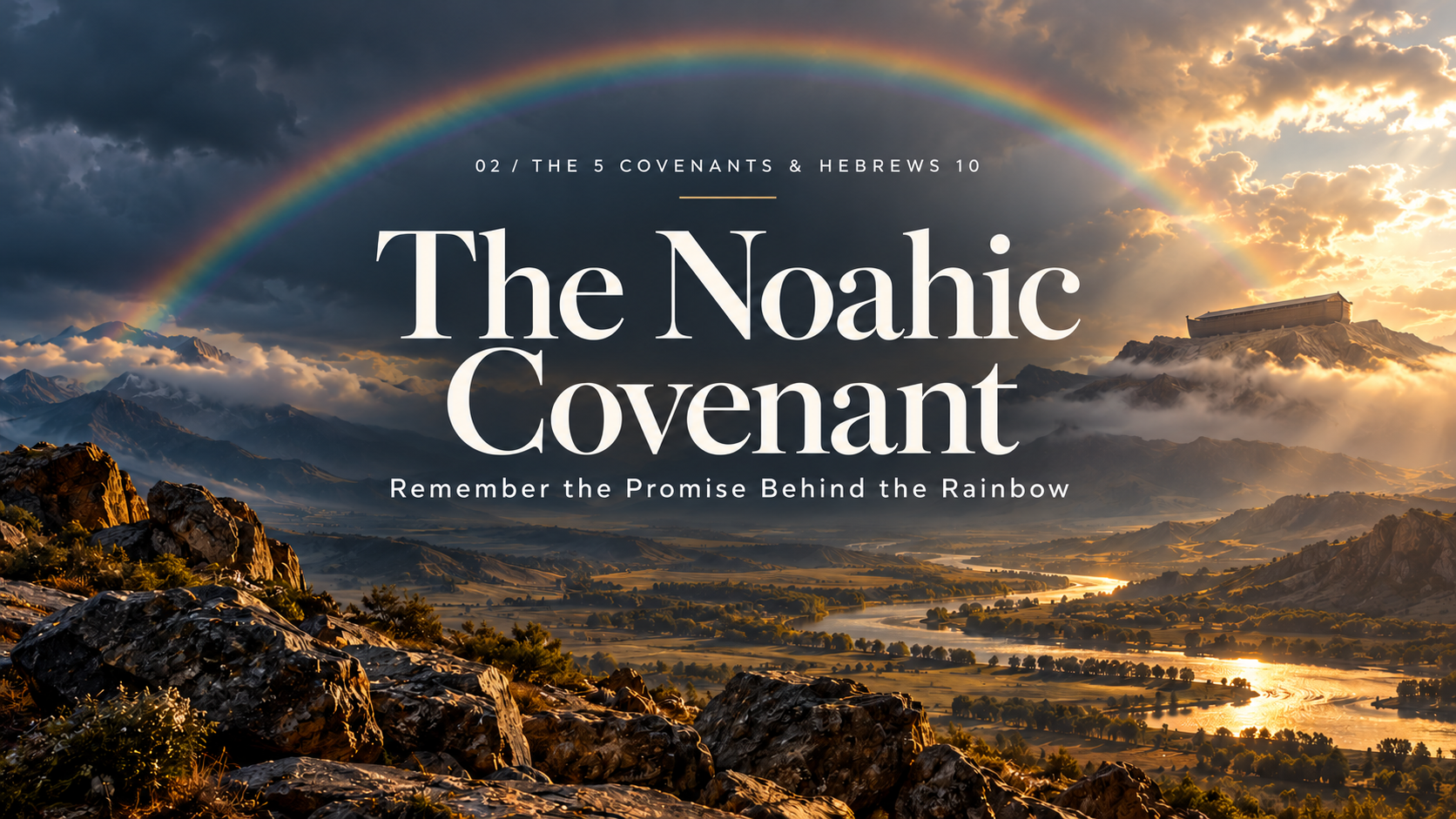
It should remind us of God’s covenant with Noah. God promised never again to destroy all flesh through a flood. This promise extends to humanity and the living creatures of the earth.
Noah did not have to earn that commitment. God made the promise, and God would keep it.
The rainbow points us beyond something beautiful in the sky. It reminds us that God is faithful. His word means something, and the passing of time does not make His promises expire.
3. The Abrahamic Covenant: God Himself Guarantees His Word
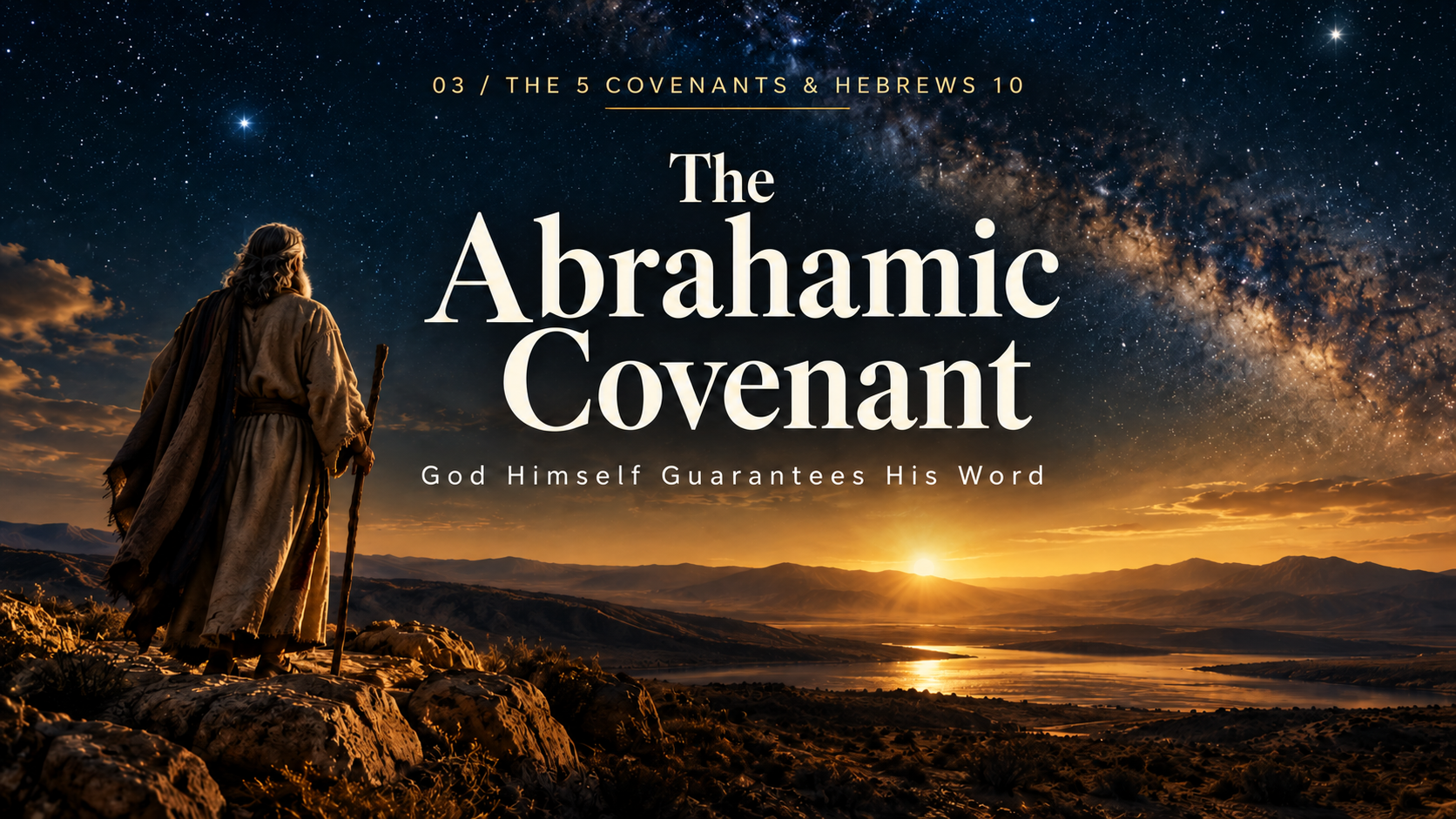
God promised Abraham land, numerous descendants, a great name, and blessing that would reach the families of the earth. Through Abraham’s line would come Jesus Christ.
In Genesis 15, Abraham asks how he can know that God’s promise will come true. God tells him to prepare the animals for a covenant ceremony.
But then something remarkable happens. Abraham falls into a deep sleep, and God alone passes between the pieces, represented by a smoking furnace and a burning torch.
Who is taking responsibility for the promise? God is.
The covenant rests on His faithfulness. And the blessing reaches us through Jesus. These promises are not disconnected pieces of ancient history. They lead us toward our Savior.
4. The Mosaic Covenant: Obedience, Consequences, and the Need for Christ
God brought Israel out of Egypt and set them apart as His treasured possession. He did not choose them because they were greater than everyone else. His choice reflected His love.
Through Moses, God gave Israel His law. This covenant included blessings for obedience and consequences for disobedience.
“You do this, and I’ll do that.”
But the law and its repeated sacrifices could not accomplish what Jesus would accomplish. Year after year, sacrifices continued. The repetition itself pointed to a need that had not been finally resolved.
That helps us understand Hebrews. Why return to the old sacrificial system when the One it pointed toward has already come?
Jesus Christ is greater than Moses. Our hope rests in Him.
5. The Davidic Covenant: A King Whose Kingdom Will Last
God promised David an enduring dynasty and kingdom. But David died. So how could that promise continue?
The answer leads us to Jesus Christ.
The promised King comes through David’s line. Elder Norm connects this covenant with Christ’s future reign, when Jesus will sit on David’s throne during the millennium.
Once again, the emphasis is on God’s faithfulness. Human kings come and go, but God’s purpose continues.
The promise does not disappear because generations pass. What God has committed Himself to do, He will fulfill.
6. The New Covenant: God Changes Us from Within
The new covenant was already promised in the Old Testament. Through Jeremiah, God spoke of putting His law within His people, writing it on their hearts, and forgiving their sin.
This reaches deeper than outward behavior.
Think about Jesus telling Nicodemus that he must be born again. We need more than religious knowledge. We need life.
As Elder Norm emphasized, we were dead in our sins. God’s grace brings us into new life through Jesus Christ.
You may look the same on the outside. But in Christ, you become a new person within.
The new covenant brings us to the heart of the gospel: forgiveness, a changed heart, and a relationship with God made possible through His Son.
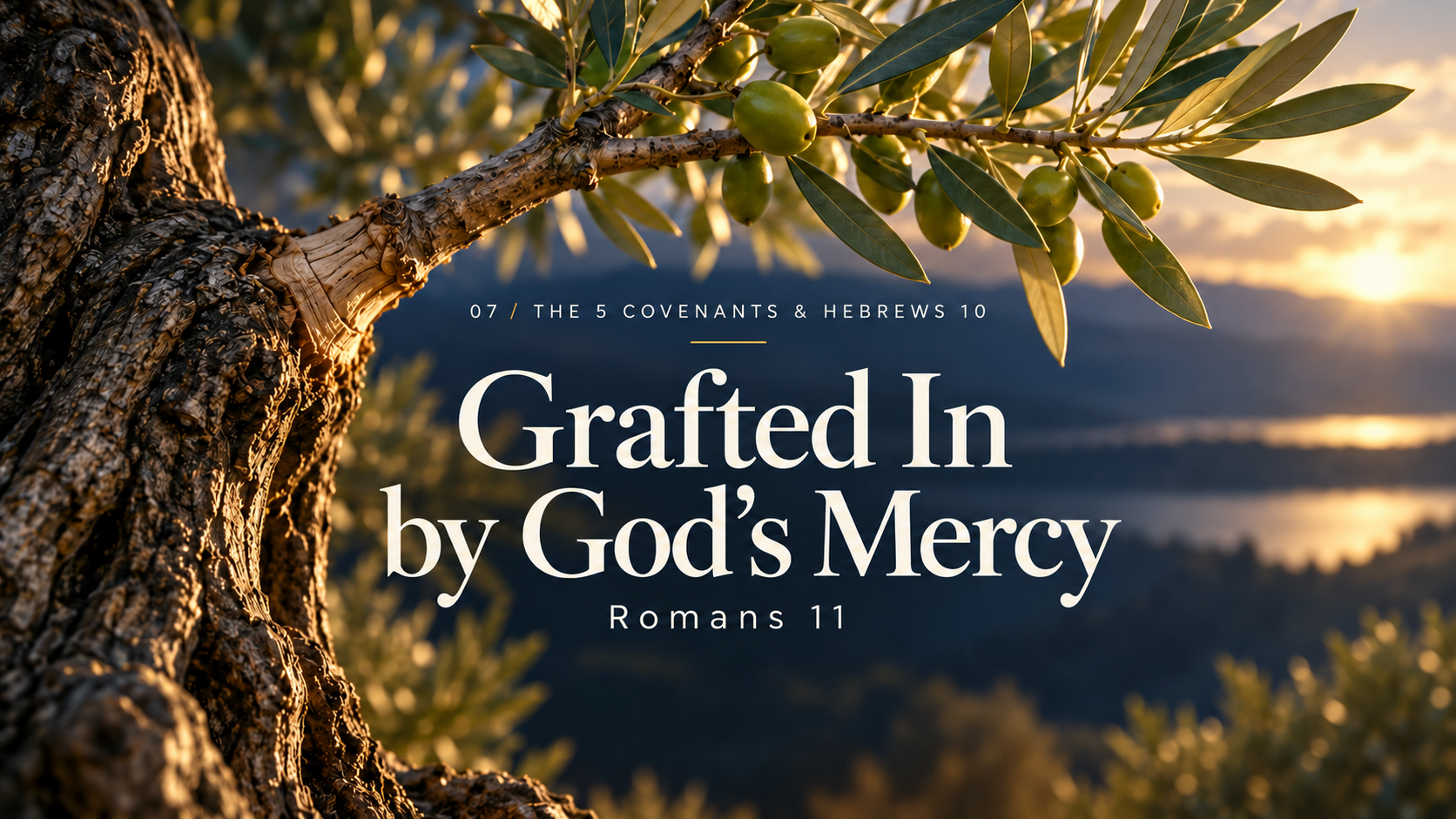
7. Romans 11: Grafted In by God’s Mercy
How do Gentiles—people who are not Jewish—share in these blessings?
Romans 11 gives us the picture of an olive tree. Some branches are broken off, and wild olive branches are grafted in. Gentile believers become partakers of blessings they did not create or earn.
What should our response be? Gratitude and humility.
We do not support the root. The root supports us.
Elder Norm teaches this passage from a dispensational perspective, emphasizing that God has not abandoned His promises to Israel. Gentile believers share in God’s mercy without making His faithfulness to Israel meaningless.
Who is sovereign here? God is. And His mercy gives us every reason to worship, with no room for boasting.
8. Hebrews 10: Copy, Shadow, Body, Mediator
Now we’re back on the road to Hebrews 10. Four words help us remember the message: copy, shadow, body, and mediator.
Copy: Hebrews 9 describes the earthly holy places as copies of the true. Christ entered heaven itself to appear in God’s presence for us.
Shadow: Hebrews 10 describes the law as a shadow of good things to come. Repeated sacrifices could not finally make worshipers perfect.
Body: God prepared a body for Christ. Jesus came as the perfect sacrifice, accomplishing what the repeated offerings could not.
Mediator: After offering one sacrifice for sins forever, Jesus sat down at God’s right hand.
The sacrifices continued year after year. Jesus offered Himself once. Our confidence rests in His completed work.
9. Jesus Intercedes for You—and He Is Coming Again
Here is the personal question: Do you know that Jesus is interceding for you?
When you pray, you are not forgotten. Your prayer is not pushed aside because God has heard from you before. He hears, and His timing is perfect.
For those who have repented and trusted Christ, forgiveness is real. The promise of the new covenant includes God remembering their sins no more.
And the Savior who intercedes for us is coming again.
Elder Norm distinguishes the catching up of believers from Christ’s return to reign. He also gives a clear warning: if someone claims to know when Jesus is coming, don’t follow them. We do not know the day or hour.
Our response is readiness and hope.
10. Put It into Practice: Trust the Savior Who Keeps His Promises
What should we do with all of this?
Trust God’s character. The covenants remind us that He keeps His word. Bring your uncertainties to the One whose faithfulness does not depend on changing circumstances.
Pray with confidence. If you belong to Christ, remember that He intercedes for you. Bring Him your needs and trust His timing.
Respond with humility. We share in God’s blessings because of His mercy. Let that produce gratitude and worship.
Examine where your assurance rests. Do you know Jesus as your Lord and Savior? Have you repented and trusted Him?
That was Elder Norm’s closing appeal. If you are unsure, don’t put the question off. Speak with a pastor or elder who can open Scripture and pray with you.
The five covenants lead us to more than information. They bring us face to face with a faithful God—and with Jesus Christ, the Savior in whom we can place our trust.
