

There is a difference between knowing about Jesus and knowing Him.
You can hear the gospel. You can understand what it says. You can become familiar with the language of church and know your way around the Bible. But has that truth gone all the way into your heart? Have you entrusted yourself to Jesus?
That is the question before us in Hebrews 10.
The writer has just given believers a tremendous encouragement: draw near to God, hold fast to your hope, and stir one another up to love and good works. Jesus has opened the way. We have access to the Father because we have been cleansed by His blood.
Our faith is in His faithfulness, not our own.
But now the writer turns to a serious warning. What happens when someone understands the truth but will not fully entrust himself to Jesus?

1. Jesus Has Opened the Way. Will You Trust Him?
The people receiving this letter had heard about the new covenant. They had heard that Jesus had accomplished what the old sacrifices could not.
But some were still holding back.
They would not fully accept that this was God’s plan—the only plan. They wanted to remain attached to what was familiar rather than entrust themselves completely to Jesus.
And here is the problem: if you will not commit to Jesus and His plan, you will never truly and deeply know Him.
This is not merely about agreeing with a statement. It is about accepting His Lordship. It is about trusting that His sacrifice is sufficient and that His grace is the only way we are saved.
We do not come to Jesus with a list of improvements that will make us acceptable. We come because we need a Savior.

2. Head Knowledge Is Not the Same as a Changed Heart
The warning begins in Hebrews 10:26:
“For if we go on sinning deliberately after receiving the knowledge of the truth, there no longer remains a sacrifice for sins.”
The issue is not that Jesus’ sacrifice has somehow become insufficient. The issue is rejecting the only sacrifice that can cleanse us.
You cannot reject the only possible Savior and then hope there is another way.
That brings us to the difference between head knowledge and heart knowledge.
A person can understand the message and have a surface-level acceptance of it without becoming a new creation. The message is interesting for a while. It feels new. Then the newness wears off, and that person moves on.
But when Jesus changes a person, something different happens.
In my own life, there were things I simply could not do before Jesus. Forgive. Repent. Accept His leadership. Submit to His Lordship.
I needed more than information. I needed the Holy Spirit at work in me.
Knowledge of the gospel is essential. But knowing what the gospel says is not a substitute for trusting the Savior it reveals.
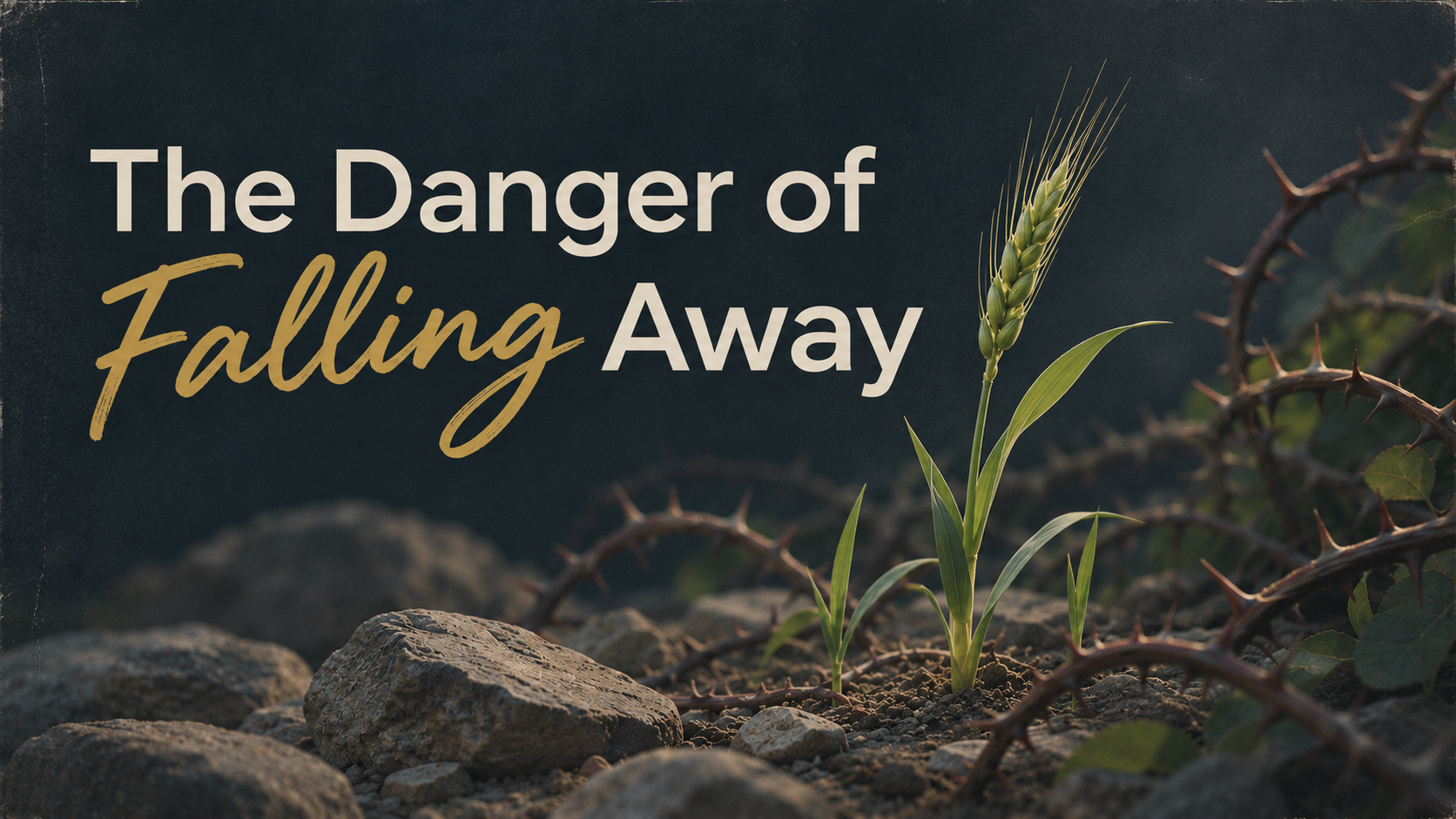
3. The Danger of Falling Away
There is a word for understanding the faith and then turning away from it: apostasy.
That is different from heresy, which rejects essential truths while still claiming the faith. Apostasy is abandoning it—turning away from the truth a person has heard and understood.
Jesus gives us a picture of this in the parable of the soils.
Some seed falls on hard ground. It never gets in. Some falls on rocky ground, where it springs up but never develops the depth it needs. Some falls among thorns, where the cares of the world choke it out.
And some falls into good soil and bears fruit.
The question is not simply whether we received the message enthusiastically at some point. The question is whether it has taken root.
Has the truth gone deep? Is it bearing fruit? Or are the cares of this world gradually choking it out?
That is why we must take these warnings seriously. Falling away does not always begin with a loud announcement that someone is rejecting Jesus.
Sometimes it begins quietly. A little compromise. A little distance. A little less attention to His Word. A little more room for what we know is not right.

4. You Can Fool People. You Cannot Fool God.
Think about the religious leaders who brought Jesus before Pilate.
They had spent the night condemning Him, abusing Him, and acting unjustly. But when they arrived at Pilate’s headquarters, they were concerned about becoming ceremonially unclean.
They were deeply concerned about what could be seen on the outside while ignoring what was happening in their own hearts.
That is a frightening picture.
We can become so concerned with maintaining a religious appearance that we fail to see the condition underneath it. We can know what to say, where to stand, and how to look convincing.
But if you have fooled all of mankind, big deal.
You cannot fool God.
He knows the truth of every human heart. He knows the difference between an outward performance and a life surrendered to Him.
The answer is not to improve the performance. The answer is to come honestly to Jesus.

5. Examine Your Own Heart First
So how do we know who has truly turned away and who is a struggling believer?
The fact is, we cannot see every heart. That is not the assignment God has given us.
We are not commissioned to go around deciding who is real and who is not. We are called to share the truth, lead people into the light, and help one another walk faithfully.
Sometimes someone needs us to say, “That is not okay. Let’s get back on track.”
And sometimes we are the ones who need to hear it.
Our first responsibility is to examine our own hearts. Paul puts it plainly in 2 Corinthians 13:5: “Examine yourselves, to see whether you are in the faith.”
Start there.
Am I a true believer? Have I entrusted myself to Jesus, or have I simply become familiar with Christian things?
Then ask another question: Am I a faithful believer?
We stumble. We make mistakes. I stand before you as someone who makes mistakes regularly. The presence of a struggle is not the same thing as rejecting Jesus.
But when the Lord brings something to our attention, will we repent? Will we receive correction? Will we come back to what He says is true?
Then ask a third question: Am I a growing believer?
A disciple does not simply settle onto a comfortable plateau and stop following. We keep pressing in. We keep listening. We keep growing in obedience to Jesus.
True. Faithful. Growing.
That is where our attention needs to be.

6. Do Not Ignore the Slow Erosion
The believers addressed in Hebrews had endured real suffering. Some had been publicly mistreated. Some had stood alongside others who were suffering. Some had lost their property.
Yet they knew they had something better—something lasting.
Many of us have not faced that kind of cost. We should thank God for that. But we should not assume that comfort means we are free from danger.
Our danger may be a slow erosion.
The world keeps pressing its priorities into our thinking. We become distracted. We grow comfortable with what once troubled us. We allow more and more things to compete for the place that belongs to Jesus.
And because it happens slowly, we may not recognize what is happening.
That is why the encouragement in Hebrews matters:
“Do not throw away your confidence.”
“You have need of endurance.”
Whether the pressure is obvious opposition or quiet compromise, we need endurance. We need to remain rooted in the truth instead of allowing the world to gradually pull us away.

7. Show the World Where Your Peace Comes From
There is a temptation to believe we can find a comfortable middle ground.
Maybe we can soften the parts of God’s Word that create tension. Maybe we can avoid discomfort by becoming a little less clear about what we believe.
But the answer is not to move away from Jesus in order to make the world more comfortable with us.
The answer is to show the world where our peace comes from.
Our peace comes from the person of Jesus Christ. It comes from the faithfulness of His promise. It comes from knowing that salvation is not something we have invented or earned.
And God has not left us without help.
He has given us His Word. He has given us His Spirit. He has given us access to His presence. He has given us His church—the fellowship of believers who encourage one another, carry burdens, and keep pointing one another back to the truth.
Do not pull away from the very things God has given you to help you endure.
We are not meant to stand alone. We are meant to stand firm together.
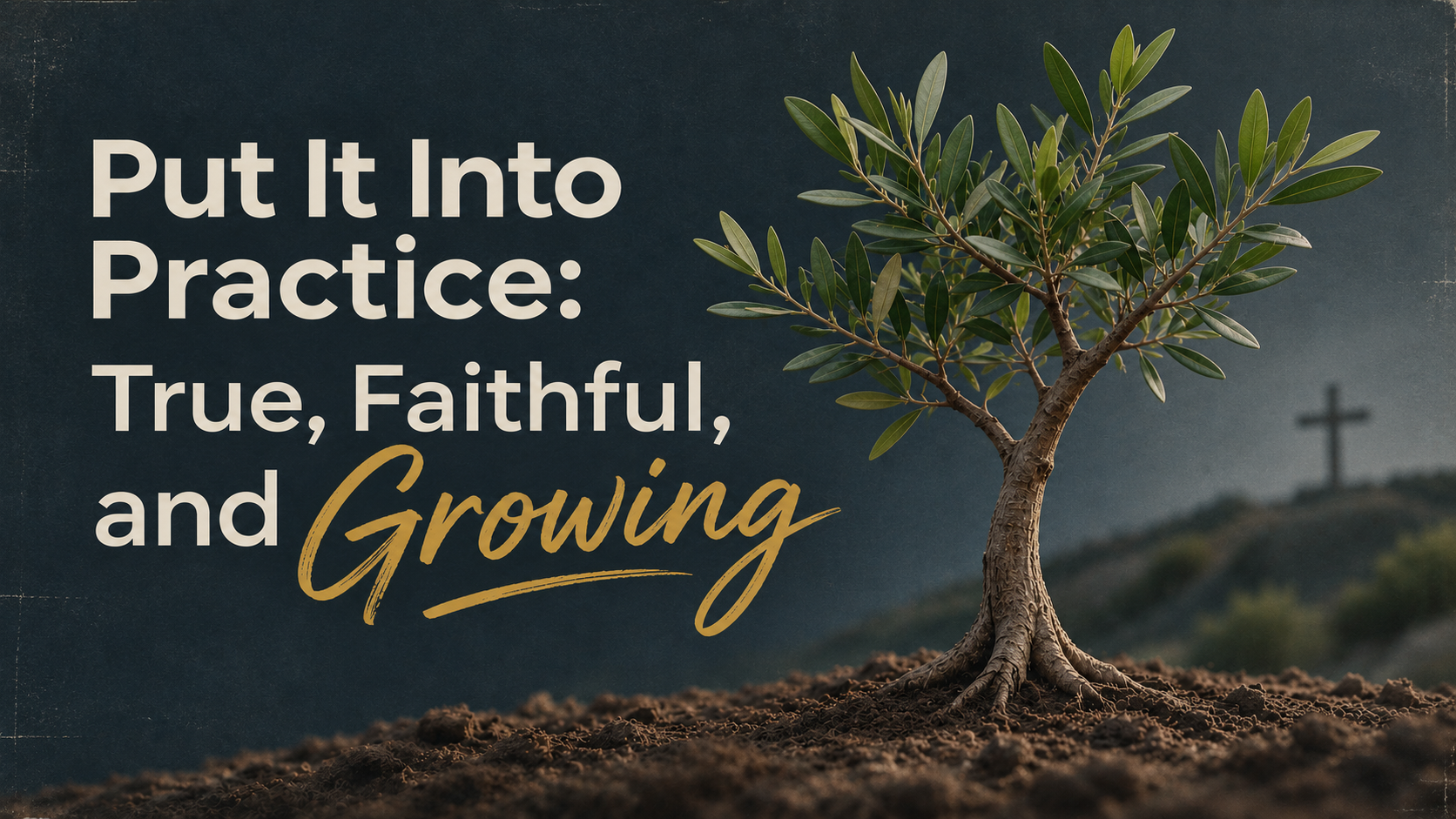
8. Put It Into Practice: True, Faithful, and Growing
Before you think about someone else who needs this message, bring it before the Lord yourself.
Start with this question: “Have I truly entrusted myself to Jesus?”
Not, “Do I know the right answers?” Not, “Have I spent enough time in church?” Have I recognized that I am sinful, that I need a Savior, and that Jesus alone can cleanse me?
Then ask, “Lord, where am I resisting You?”
Be specific. Is there a sin you keep defending? Someone you refuse to forgive? A part of His Word you would rather ignore? Stop making room for it. Bring it honestly before Him and repent.
Next, ask someone you trust to speak into your life.
Not someone who will simply tell you what you want to hear. Someone who loves Jesus and loves you enough to say, “There is something here that needs to change.”
And take a concrete step toward growth this week:
Return to God’s Word where you have neglected it.
Make time to pray honestly instead of maintaining an appearance.
Reconnect with the church family if you have been pulling away.
Ask for help with a burden or temptation you have kept hidden.
Encourage someone else who needs help standing firm.
None of these things earns salvation. We do them because we love the Savior who first loved us.
That is the heart of obedience.
Not merely, “I want to be a good person.” Not merely, “I want people to think well of me.”
Because He loved me, I want to follow Him. Because His promises are true, I can trust Him. Because His Spirit is at work in me, I do not have to remain who I was.
So let us be a church family that glorifies God, stands firm on His Word, carries one another’s burdens, and serves one another out of love for Jesus.
“We are not of those who shrink back and are destroyed, but of those who have faith and preserve their souls.”
