
The Veil Is Torn: Living in the Freedom Jesus Secured
Hebrews continually brings us back to one central truth: Jesus Christ is greater. He is greater than every earthly system, every temporary provision, and every human attempt to make ourselves right with God.
Hebrews 9 helps us see that truth through the picture of the tabernacle—the place where Israel worshiped God under the old covenant. There was a Holy Place, where priests served regularly, and beyond a curtain was the Most Holy Place. Only the high priest could enter there, only once a year, and only with the blood of a sacrifice.
That curtain represented a real separation. God is holy, and sinful people could not casually enter His presence.
But when Jesus died on the cross, something incredible happened: the temple veil was torn from top to bottom. The barrier was removed—not because God became less holy, but because Jesus had accomplished what no earthly sacrifice could accomplish. Through His death and resurrection, He opened the way for sinners to be forgiven, restored, and brought near to God.
Jesus Opened the Way
The old covenant was not bad or mistaken. It was God-given and purposeful. Yet it was always intended to point beyond itself.
The sacrifices, the priesthood, the tabernacle, and the Day of Atonement all served as shadows of something greater still to come. They revealed that sin is serious, that God is holy, and that forgiveness requires sacrifice. But they could not permanently cleanse the human heart.
Hebrews tells us that Christ entered “once for all” into the holy places—not with the blood of goats and calves, but with His own blood. He secured eternal redemption.
Jesus did not merely improve the old system. He fulfilled it. He did not simply clean up our outward behavior. He makes us new from the inside out.
As 2 Corinthians 5:17 says:
“Therefore, if anyone is in Christ, he is a new creation. The old has passed away; behold, the new has come.”
Because of Jesus, we do not have to wonder whether the work of salvation is enough. It is finished. The veil is torn. The path is open.
Do Not Hold On to What Perishes
For most of us, the temptation is not to return to Old Testament sacrifices or temple worship. But we do face another temptation: trusting in things that will not last.
We can look for security in comfort, money, success, health, reputation, plans, possessions, or the approval of others. None of those things are necessarily evil—but none of them can bear the weight of our faith.
They are temporary.
Hebrews reminds us not to cling to what is passing away when we have been given access to what is eternal. Jesus is our lasting hope. His gospel is our foundation. His righteousness—not our performance—is what makes us able to stand before a holy God.
When life feels uncertain, remember this: the things around us may change, but Christ does not. He has opened the way to the Father, and He remains our perfect High Priest.
Guard Your Conscience
Hebrews 9 also speaks about the conscience. The old covenant sacrifices addressed external rituals, but they could not fully cleanse the conscience of the worshiper. Jesus can.
Our conscience is a God-given warning system. It exposes sin, alerts us to wrong motives, and draws us back toward repentance and restored fellowship with God. But like a knife that becomes dull with repeated use, our conscience can become dull when we ignore conviction, excuse sin, or allow the values of the world to shape us more than the Word of God.
Daily life is full of voices competing for our attention. The noise of social media, entertainment, busyness, self-centered thinking, and cultural pressure can slowly weaken our sensitivity to the Holy Spirit.
That is why we need to return again and again to God’s Word, prayer, fellowship, confession, and repentance.
We are not called to hide from God when we sin. We are called to come to Him honestly. The path to cleansing is always open through Jesus Christ.
There is never a line for God’s mercy.
Keep Short Accounts With God
Sometimes we treat prayer casually. We can rush into God’s presence with a distracted heart while holding on to bitterness, resentment, unresolved conflict, or secret sin.
Yet the invitation to come boldly before God is not an invitation to take His holiness lightly. Jesus gives us access to the Father, and that access should lead us to gratitude, humility, repentance, and awe.
When the Holy Spirit brings something to mind, do not delay.
Confess your sin.
Seek forgiveness.
Make amends when you have hurt someone.
Release bitterness.
Turn away from the patterns that are ruling your heart.
Let God restore what has become out of line.
One helpful phrase is: Keep short accounts with God.
Do not allow unconfessed sin to pile up. Do not wait until you “feel more spiritual” to repent. Do not assume tomorrow is the right day to deal with what God is showing you today.
Christ’s sacrifice is sufficient. His grace is available. His cleansing is real.
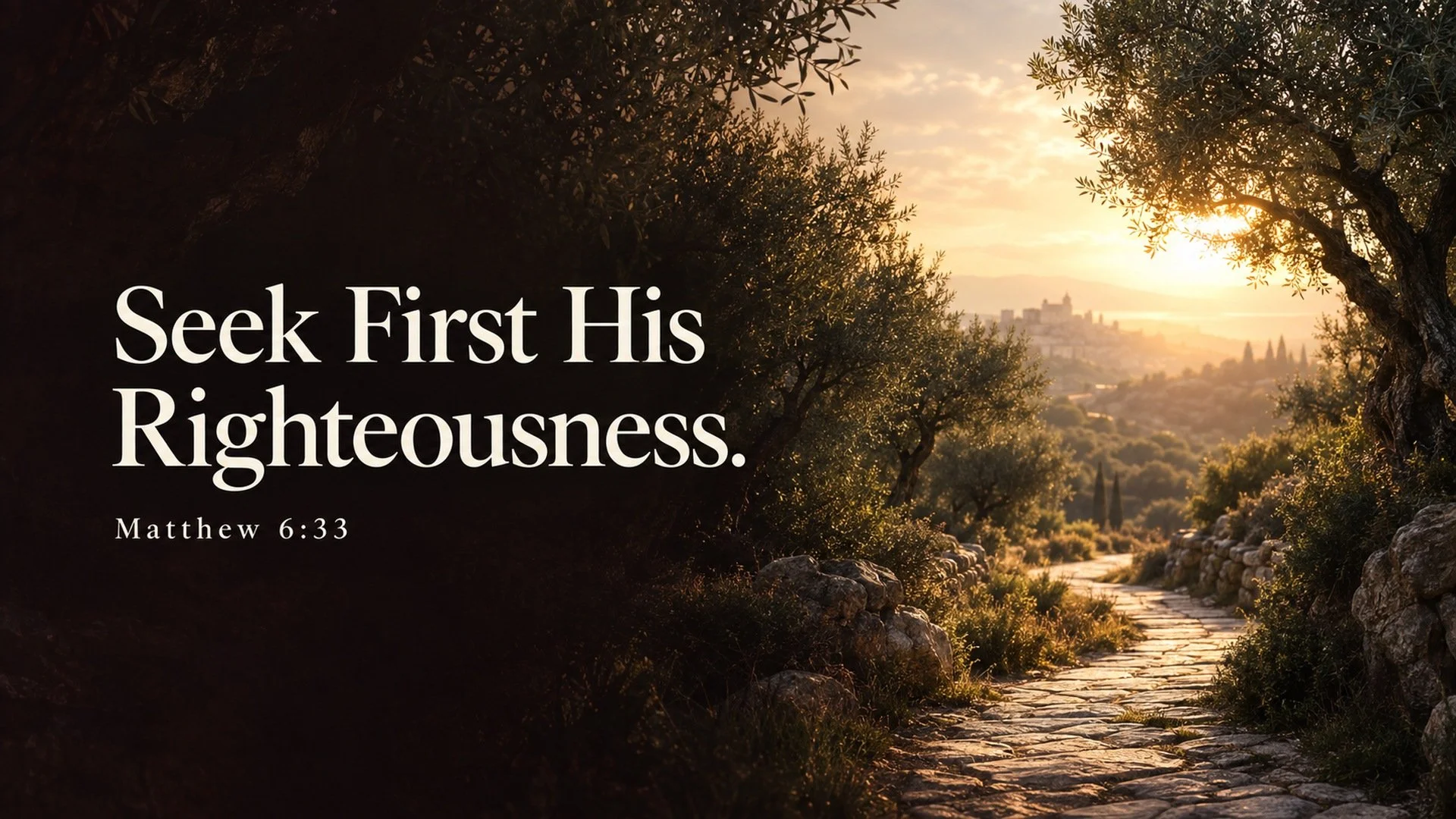
Seek First His Righteousness
It can feel overwhelming to think about every area of life that needs to change. We may see habits, attitudes, fears, relationships, and failures that all need God’s work.
Jesus gives us a simple and powerful direction:
“Seek first the kingdom of God and his righteousness, and all these things will be added to you.” — Matthew 6:33
Start there.
Seek God first. Seek His righteousness first. Bring your heart before Him. Let His Word sharpen your conscience. Let His Spirit reveal what needs to change. Let His church encourage, correct, and strengthen you.
The good news is not that we can make ourselves worthy enough to come to God. The good news is that Jesus has already made the way.
The veil is torn.
The work is finished.
The invitation is open.
Come to Him with faith. Come to Him with repentance. Come to Him because Christ has secured eternal redemption for all who trust in Him.
